Understanding USDA Plant Hardiness Zones When Buying Perennials
USDA hardiness zones help Pennsylvania gardeners judge perennial survival, but site conditions matter: a zone rating guides buying, not guarantees.
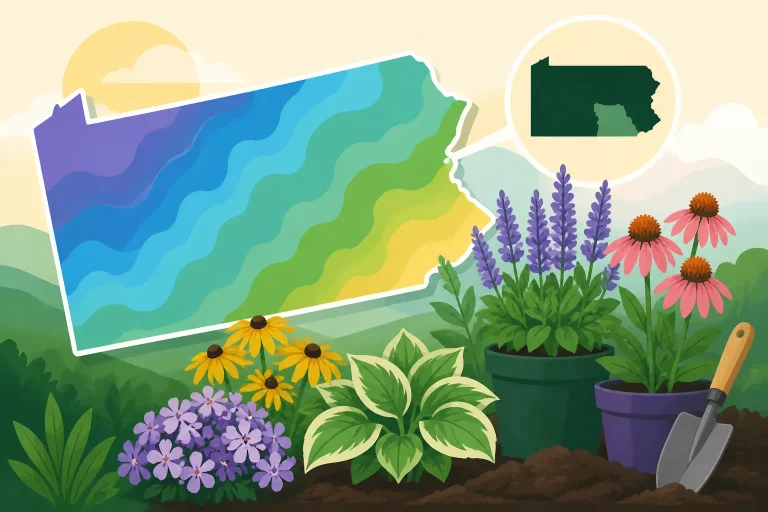
USDA hardiness zones help Pennsylvania gardeners judge perennial survival, but site conditions matter: a zone rating guides buying, not guarantees.

Pennsylvania hardiness zones help match plants to winter lows, but frost dates, microclimates, and soil conditions still shape planting decisions.
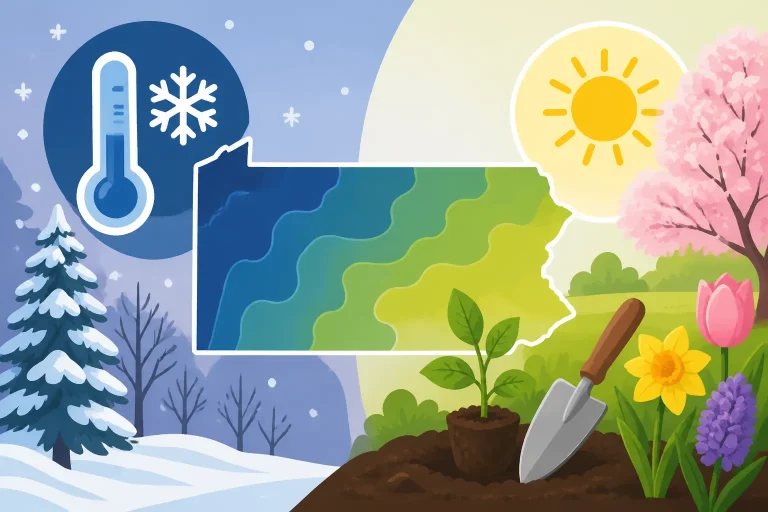
Pennsylvania gardeners often look up a hardiness zone hoping it will tell them when to sow seeds or set out transplants. The catch is that the map describes winter cold, not the timing of spring frosts or the warmth of garden soil. Knowing what each measure can—and cannot—tell you makes it easier to choose plants…
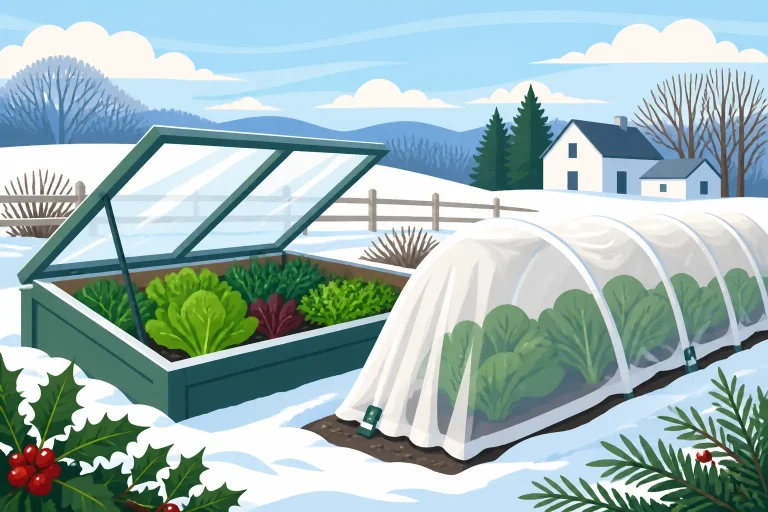
Pennsylvania winters can bring mild spells, sharp freezes, wind, snow, and long stretches of low light. A cold frame or row cover can help you harvest hardy crops longer, but neither makes winter behave like summer. The key is matching the structure to your garden, choosing crops that can handle cold, and managing ventilation and…
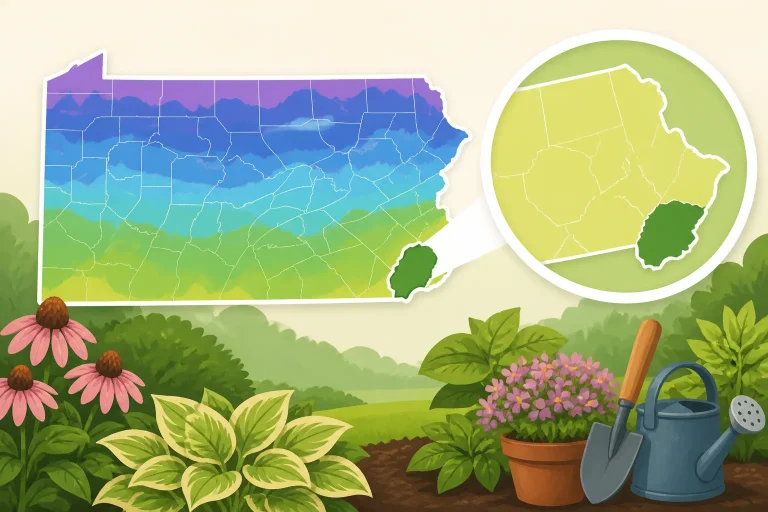
Delaware County generally falls in USDA Zone 7a, with some Zone 7b locations; use the map for plant selection, not spring planting dates.

Frost risks in high-elevation Allegheny Plateau gardens vary by slope, exposure, and cold-air flow; use local readings and flexible planting plans.
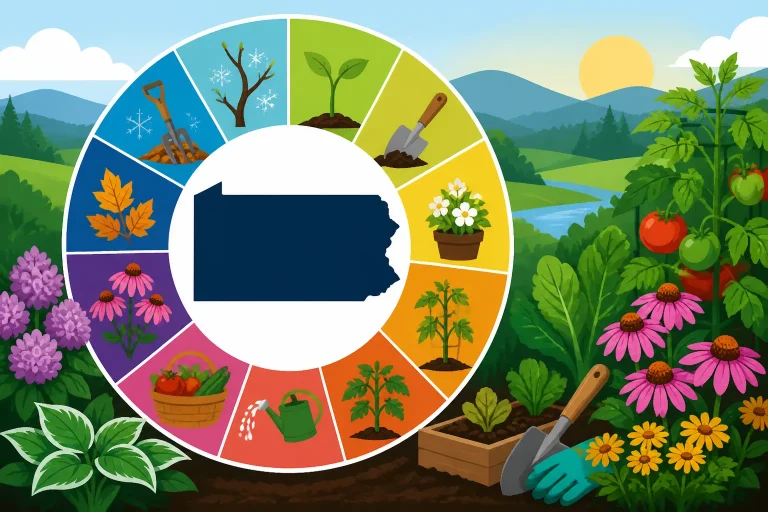
Month-by-month Pennsylvania gardening calendar for flexible seasonal planning: follow local weather, soil conditions, and plant needs rather than fixed dates.
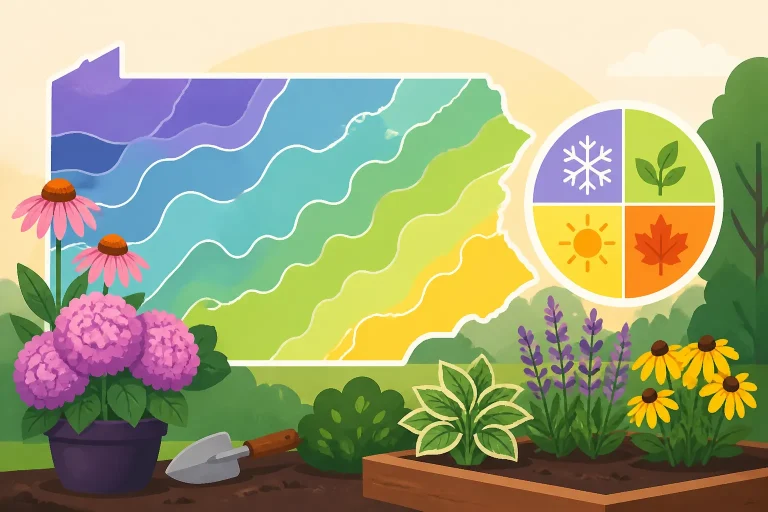
Pennsylvania plant hardiness zones indicate broad winter tolerance, not planting dates; pair the map with frost timing and your yard’s microclimate.
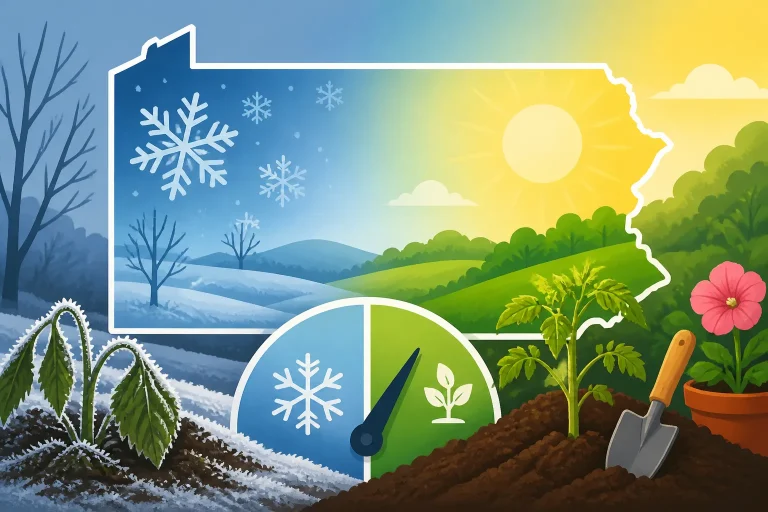
Pennsylvania planting safety depends on last-frost benchmarks, crop tolerance, soil warmth, local conditions and forecasts—not a single statewide date.