What Hardiness Zone Is Delaware County Under the USDA Map?
Delaware County gardeners often see different zone labels for nearby ZIP codes and wonder which one to trust. The USDA Plant Hardiness Zone Map is a useful starting point for choosing perennials, trees, and shrubs, but it does not tell you when to sow vegetables or whether a plant will thrive in your yard. Here’s how to read the map and use it alongside local conditions.
Delaware County’s USDA hardiness zone
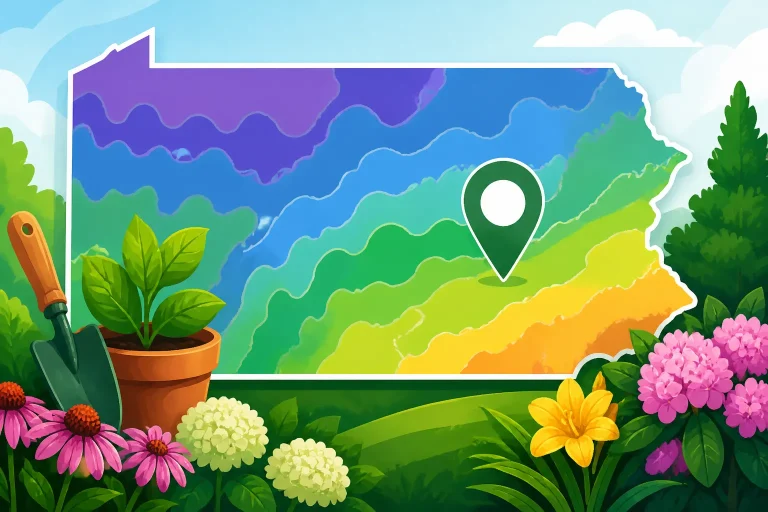
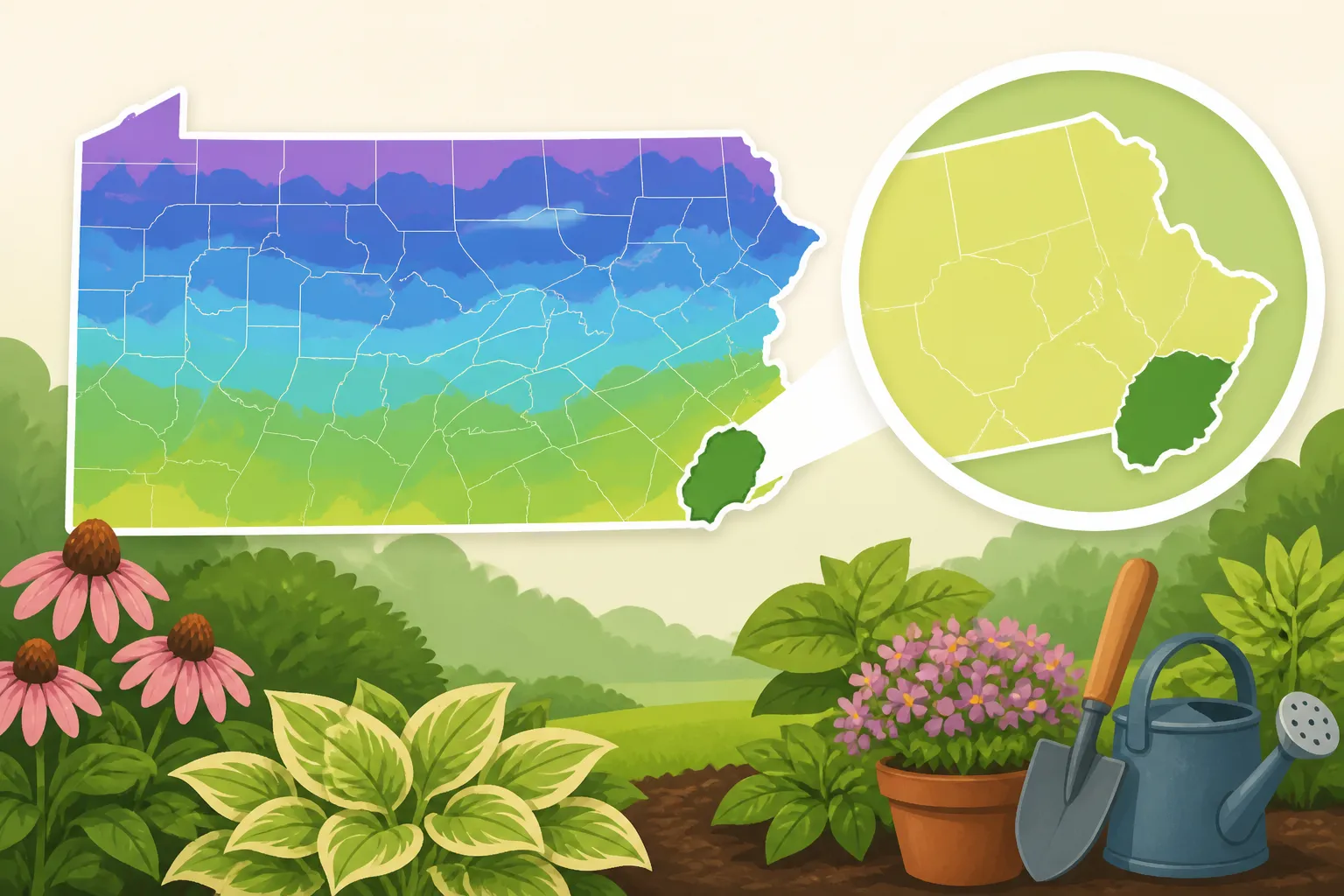
Delaware County generally falls in USDA Plant Hardiness Zone 7a, with some warmer locations shown as Zone 7b. The exact boundary depends on the map location: ZIP codes and nearby neighborhoods can fall in different zones, so a countywide label is only a broad summary.
Zone 7a represents an average annual extreme minimum winter temperature of 0°F to 5°F. Zone 7b represents an average annual extreme minimum of 5°F to 10°F. The difference between the two is small on paper, but it can matter when choosing a plant that is close to its cold-hardiness limit.
| USDA zone | Average annual extreme minimum temperature | What the label can help you assess |
|---|---|---|
| 7a | 0°F to 5°F | Whether a perennial, tree, or shrub is generally suited to colder winter conditions in the zone |
| 7b | 5°F to 10°F | Whether a plant that needs slightly milder winters may be worth considering |
| Both | Based on long-term winter temperature averages | General winter survival potential, not exact conditions in one yard |
The USDA map divides broad temperature ranges into zones and half-zones. It is not a map of a single winter’s coldest temperature, nor does it predict what the thermometer will read on a particular night. A plant rated for Zone 7 may still be damaged during an unusually severe winter, especially if it is young, exposed, or growing in poorly drained soil.
For the county’s broader regional picture, see Pennsylvania Hardiness Zones: Finding Your Town on the Map. To look up a particular location, How to Look Up Your Pennsylvania ZIP Code on the USDA Zone Map explains how to navigate the map without treating a ZIP code as a precise yard-level forecast.
What a hardiness zone tells you—and what it does not
Hardiness zones are designed to help compare plants’ ability to survive winter cold. A nursery label listing a plant as hardy to Zone 7 gives you a useful threshold to consider, but it is not a guarantee. The plant’s condition, age, exposure, soil drainage, and care also affect how it fares.
A plant listed for Zones 7 through 9 is generally considered suitable for a site in Zone 7, subject to those local conditions. A plant rated only for warmer zones may be at risk outdoors through winter, even in a warmer part of Delaware County. Conversely, some plants rated for colder zones will grow in Zone 7, but the zone alone does not tell you whether they will suit your soil, light, or moisture conditions.
Hardiness zones do not tell you:
- When the last spring frost will occur. The zone is based on winter minimums, not the timing of spring freezes.
- When to plant vegetable seeds or transplants. Soil temperature, crop type, and frost risk all matter.
- How hot or humid summer will be. A plant can tolerate the county’s winter lows but struggle with summer heat.
- How much rain a yard receives or retains. Drainage and soil moisture can vary substantially across a small area.
- Whether a plant will thrive in a particular spot. Sunlight, wind exposure, slope, and nearby buildings can change growing conditions.
This distinction matters when planning a vegetable garden. A warm-season crop may need reliably warm soil and nights, even if its label suggests it can grow in Zone 7. For spring timing, use frost and planting information rather than the zone alone; Hardiness Zones vs Frost Dates: When Can You Actually Plant? explains how the two tools answer different questions.
Why nearby locations can have different zone labels
The map assigns zones using long-term temperature information, but local surroundings also influence the temperatures a plant experiences. A warmer urban block, a sheltered courtyard, and an open, windy slope can have different conditions even when they share a map zone.
In Delaware County, elevation, exposure, buildings, pavement, and nearby open spaces can all shape a garden’s winter and spring conditions. A site protected by buildings may stay milder than a more exposed spot. A low area where cold air settles can be colder than a nearby slope. These differences do not necessarily change the USDA zone displayed for a location, but they can affect plant performance.
A few common yard features are worth noting:
- Cold-air pockets: Cold air flows downhill and can collect in low spots. Plants in a low pocket may face colder nights than plants higher up.
- Wind exposure: Wind can dry evergreen leaves and increase stress during cold weather, particularly where plants have little shelter.
- Pavement and walls: Hard surfaces and masonry can absorb heat and release it later. A sheltered bed near a building may differ from an open lawn.
- Slope and aspect: A slope’s position and the direction it faces affect sun exposure and how quickly it warms or dries.
- Drainage: Wet soil can leave roots more vulnerable to winter injury than well-drained ground, even at the same temperature.
These effects are often called microclimates: small-scale differences in a yard’s growing conditions. Before choosing a plant near the edge of its hardiness range, observe where frost lingers, where snow melts first, and which areas face the prevailing wind. How Yard Microclimates Can Shift Your Planting Conditions offers more detail on assessing these site differences.
A ZIP-code result is useful, but it should not be treated as an exact description of every property in that ZIP code. The map is a regional tool, not a survey of individual gardens. If a plant is marginal for Zone 7a or 7b, consider whether the planting spot is especially exposed or sheltered before buying it.
How to use the zone when choosing plants
Start with the plant’s hardiness rating, then check whether the rest of its growing requirements fit your site. If a tree or perennial is rated for conditions colder than Zone 7, winter survival may be less of a concern, but the plant still needs suitable light, soil, moisture, and space. If its listed range begins at Zone 7, Delaware County may be within its stated range, but local exposure and winter variability still matter.
When comparing plants, keep these steps in mind:
- Check the full hardiness range. Look for the plant’s listed USDA zones rather than relying on a common name or a general description.
- Compare the rating with the mapped location. If the map shows Zone 7a, a plant suited only to Zone 7b or warmer may carry more winter risk.
- Read the other growing requirements. Sun, shade, soil moisture, drainage, and mature size can be just as important as cold tolerance.
- Think about the planting spot. A sheltered location may offer some protection, while an exposed or poorly drained spot can increase stress.
- Be cautious with borderline choices. If losing the plant would be costly or difficult to replace, choose one with a more forgiving range.
- Reassess after establishment. Newly planted specimens may be less resilient than well-established plants, so give them appropriate care as they settle in.
Nursery labels can vary in how much detail they provide. When a label gives a range, use the colder end as a conservative guide to winter tolerance, but remember that a zone rating does not account for every garden condition. The resource Reading Nursery Labels: What Zone Ratings Mean for Pennsylvania can help make sense of the information on plant tags.
For plants near their cold limit, placement and protection can make a difference, but protection is not a substitute for choosing a suitable plant. A sheltered site may reduce exposure; it cannot guarantee survival through every winter. Consider the plant’s full needs and the amount of care you are willing to provide.
Zones, frost dates, and planting calendars
A hardiness zone is most useful for long-term plant selection. A planting calendar addresses a different question: when conditions are likely to suit a particular crop or planting task. Mixing these tools can lead to early planting mistakes.
For example, a vegetable can be appropriate for Zone 7 and still be injured by a late spring frost. Some cool-season vegetables tolerate chilly conditions better than heat-sensitive seedlings, while warm-season crops generally need warmer soil and less frost risk. The zone label does not tell you when those conditions will arrive in a given year.
Frost dates are estimates based on probabilities, not fixed calendar promises. They vary from year to year, and nearby locations may differ. Use regional frost information as a planning benchmark and pay attention to the short-term forecast when planting tender crops. When Is It Safe to Plant in Pennsylvania? Last-Frost Benchmarks and Spring Frost Probabilities and Garden Planting in Pennsylvania explain how to use frost estimates without treating them as guarantees.
A practical way to combine the tools is:
- Use the USDA zone to shortlist trees, shrubs, and perennials that are likely to withstand winter cold.
- Use frost guidance and crop-specific schedules to plan seed sowing and transplanting.
- Check soil temperature and moisture when those conditions matter to the crop.
- Adjust for your yard’s exposure, drainage, and cold-air pockets.
- Keep a simple record of planting dates, frost damage, and plants that perform well.
For vegetable timing, a regional calendar is more useful than a hardiness-zone label by itself. Pennsylvania Vegetable Sowing and Transplanting Calendar can help organize crop timing, while Month-by-Month Pennsylvania Gardening Calendar provides a broader seasonal planning reference.
When winter approaches, remember that a plant’s zone rating concerns cold tolerance, not its ability to withstand every seasonal stress. Wind, drought, saturated soil, sudden temperature changes, and a lack of acclimation can all affect winter survival. For practical protection options, see Pennsylvania Fall Garden Cleanup and Winter Preparation.
Frequently Asked Questions
Is all of Delaware County in Zone 7a?
No. Delaware County generally falls in Zone 7a, but some warmer locations are shown as Zone 7b. Check the map for the specific location you are planning for rather than relying only on the county label.
Does Zone 7 mean I can plant vegetables early?
No. The hardiness zone describes average winter cold and does not set spring planting dates. Use crop-specific schedules, frost estimates, soil conditions, and the weather forecast to plan vegetable planting.
Can a Zone 8 plant survive in Delaware County?
A plant rated for Zone 8 or warmer may be vulnerable to winter cold in Zone 7. A sheltered spot may improve its chances, but it cannot remove the risk. Consider a plant rated for your mapped zone if dependable outdoor survival is important.
Why does my yard seem warmer or colder than the map?
The map shows regional patterns, while a yard’s slope, wind exposure, buildings, pavement, and drainage influence local conditions. Low spots can collect cold air, and sheltered areas may be milder than exposed ones.
Disclaimer
This article is for general informational purposes only and does not constitute professional advice. Laws, prices and regulations vary by location and change over time. Consult a qualified professional for guidance on your specific situation. Pennsylvania Gardening Guide is not a government agency and is not affiliated with any university extension, state department of agriculture or other government agency.