Frost Risks in High-Elevation Allegheny Plateau Gardens
Gardening on Pennsylvania’s high-elevation Allegheny Plateau means planning around more than a regional frost date. Elevation, slope, wind, and cold-air movement can make one garden freeze while another nearby stays clear. This guide explains how to read those local risks, choose planting windows, protect crops on vulnerable nights, and adjust after a frost.
Why frost risk varies across the Allegheny Plateau
A frost forecast describes conditions over an area; it cannot account for every garden’s slope, shelter, soil, or exposure. On the Allegheny Plateau, a few yards of difference in position can change how cold a planting site gets overnight. A garden on an exposed ridge may face wind and rapid temperature swings, while a low spot can collect cold air and stay colder than its surroundings.
Elevation matters because temperatures generally decrease with height through the atmosphere. But elevation alone does not determine which garden gets frost first. On clear, calm nights, the ground loses heat, and the air nearest the surface cools. Cold air is denser than warm air and can flow downhill into hollows and other low places. A sheltered dip can therefore be more frost-prone than a higher spot nearby. The patterns are not identical every night: cloud cover, wind, terrain, and incoming weather all affect overnight cooling.
That is why a single forecast low or regional frost date should be treated as a planning reference rather than a promise. A forecast station may not represent the air temperature at leaf height in a garden. In some conditions, plant surfaces can cool enough for frost to form even when a nearby reported air temperature is slightly above freezing. Conversely, a breezy night can mix the air and reduce the sharp temperature differences that develop during calm conditions.
The two main types of frost-producing conditions are worth distinguishing:
- Radiational cooling happens when the ground loses heat, especially under clear skies and light winds. Cold air may settle in low areas, creating local pockets of risk.
- Advective cooling happens when a colder air mass moves through. Wind is often more noticeable, and cold exposure may affect a larger area more evenly.
A forecast of a cold night does not always tell you which pattern will dominate. Watch the forecast’s discussion of cloud cover and wind as well as the expected low. A clear, calm night can be concerning for a frost pocket even if the regional low does not sound extreme. A windy night can still damage plants, but it may not create the same sharply defined cold-air pool.
Plant response also varies. Established, cool-season crops may tolerate some cold better than tender seedlings, newly set transplants, or warm-season crops. Flowers and developing fruit can be especially vulnerable at sensitive stages. A plant that survives a cold night may still have damaged leaves or slowed growth. Frost risk is therefore not just a question of whether ice is visible; the stage and condition of the plant matter too.
For a wider explanation of why a yard’s conditions can differ from a map or regional forecast, see How Yard Microclimates Can Shift Your Planting Conditions. If cold air repeatedly settles in a particular section of your property, Cold Air Drainage in Low Garden Pockets: Spotting Frost Pockets offers more on recognizing that pattern.
Map your garden’s frost-prone and sheltered spots
Before choosing planting dates or buying protection, observe how cold behaves in your own yard. A simple site map can help you remember where frost lingers and where crops tend to recover well. Include slopes, low points, walls, fences, trees, buildings, and the direction of prevailing exposure. You do not need a detailed survey; a sketch and a few observations are enough to reveal useful patterns.
Look at the shape of the land
Identify the highest and lowest parts of the garden area. Notice whether there is an unobstructed route for cold air to flow downhill or whether a hedge, fence, wall, or dense planting blocks that flow. A barrier can reduce wind, but it may also trap cold air behind it. The effect depends on the site and the type of weather, so avoid assuming that every sheltered location is safer.
Pay attention to hollows, the foot of a slope, and enclosed corners. If frost repeatedly appears in a dip while nearby higher beds remain clear, treat that area as a higher-risk planting site. Raised beds do not automatically escape frost: their height may improve drainage, but plants still experience the air temperature around their leaves. Likewise, a paved area or wall may release stored heat on some nights, but its benefit can vary with the weather and its exposure.
A south-facing or otherwise sunny bed may warm quickly during the day. That can help early growth, but it does not guarantee protection overnight. Plants encouraged into active growth by a warm site may be exposed if a late cold spell follows. Do not use daytime warmth alone as a sign that frost risk has passed.
Measure conditions near the plants
A basic minimum-maximum thermometer can help distinguish your garden from the nearest forecast location. Place it where it reflects the conditions your plants experience: near the beds, at a consistent height, and away from direct sun, heated walls, and other misleading influences. For overnight frost monitoring, keep a record of readings alongside the morning weather and the location of any visible frost.
Use measurements as a local comparison, not as a perfect prediction. One thermometer cannot describe every bed, and a device placed too close to a building may report conditions unlike those in an open garden. If the property has both a low pocket and an exposed slope, compare them with separate sensors when practical. How to Calibrate Orchard and Garden Frost Thermometers can help you check whether your readings are dependable.
A simple log might include:
- Date and approximate time of the lowest reading
- Minimum temperature at each sensor
- Cloud cover and wind conditions
- Whether frost was visible, and where
- Which plants were covered or exposed
- Any damage noticed the following day
After several cold nights, patterns often become clearer. You may find that one corner gets frost more often, or that a bed behind a windbreak stays colder on calm nights. Those observations can inform future planting choices more reliably than treating every part of the property as if it had identical conditions.
Check more than one forecast reference
Use a local forecast for the immediate outlook, but compare it with conditions at your garden and with available station information. A station farther away or at a different elevation may be useful for context, not an exact substitute. The best reference is one that resembles your site in terrain and exposure. Finding the Right NOAA Frost Station for Your Pennsylvania Garden explains how station choice affects the usefulness of frost information.
The key is to look for agreement and uncertainty. If your local forecast is near freezing, your garden thermometer has recorded lower temperatures than the forecast location, and the night is expected to be clear and calm, take the risk seriously. If the forecast changes, reassess rather than assuming an earlier prediction still applies.
Plan planting around risk, not a fixed calendar date
Regional calendars are useful for organizing the season, but they cannot guarantee a frost-free night. A last-frost benchmark is a probability based on observations for a location or period, not a date when frost becomes impossible. For your garden, a benchmark is most useful when paired with a realistic view of site conditions and the crop’s cold tolerance.
Start by dividing crops into broad risk groups:
| Planting group | Examples | Practical approach on a frost-prone site |
|---|---|---|
| Cool-season crops that tolerate chilly conditions | Peas, spinach, and other hardy greens | Sow or plant according to local guidance, while watching for unusually cold spells and protecting tender seedlings when needed |
| Crops that handle cool weather but may be injured by a hard freeze | Lettuce, brassicas, and many established vegetable starts | Use a flexible window; keep a cover ready if cold nights are forecast |
| Tender warm-season crops | Tomatoes, peppers, cucumbers, squash, and beans | Wait for suitable conditions rather than relying only on a calendar benchmark; protect transplants during lingering cold risk |
| Flowers, blossoms, or developing fruit | Newly opened blooms and young fruit | Monitor closely during cold spells because the vulnerable stage can be damaged even when the whole plant survives |
The examples are broad categories, not a substitute for crop-specific instructions. Varieties, growth stages, and growing conditions make a difference. Use local planting advice for the crop and keep a margin of caution for the coldest parts of your yard. For broader timing principles, see Hardiness Zones vs Frost Dates: When Can You Actually Plant? and Spring Frost Probabilities and Garden Planting in Pennsylvania.
A hardiness zone is not a spring planting calendar. It describes average annual extreme winter lows, which can help with perennial selection, but it does not tell you when a late spring frost will occur. Nor does the fact that a plant can survive winter mean that its tender new leaves or blossoms can withstand a spring freeze. Use frost information for short-term planting decisions and zone information for a different purpose.
For tender crops, consider several signals together:
- Check the regional guidance. Use a Pennsylvania planting calendar or crop-specific recommendations as a starting point, not a guarantee.
- Compare the site. If your beds are elevated, exposed, or noticeably colder than a nearby station, allow extra caution.
- Watch the short-range forecast. Pay attention to the expected low, wind, and cloud cover, and check again as the night approaches.
- Consider the plant’s stage. A newly transplanted seedling may be more vulnerable than an established plant, and blossoms can be at risk even when foliage looks healthy.
- Decide whether protection is practical. If a cold spell is possible and you can cover plants properly, planting may be manageable; if not, waiting may be the simpler choice.
Staggering plantings can also reduce the risk of losing an entire crop to one cold event. Instead of putting every seed or transplant in at once, divide the planting into separate batches, following the crop’s recommended sowing window. If one planting is damaged, the later one may still grow. This is not a way to defeat a short-season climate, and it may not suit every crop, but it can spread the risk.
A warmer site can provide useful growing time, yet it can also encourage early growth before the risk has ended. Do not assume that a stretch of mild weather is proof that cold nights are over. When uncertain, decide whether the likely benefit of planting early outweighs the work of watching forecasts and protecting plants.
For a season-wide view, use Month-by-Month Pennsylvania Gardening Calendar alongside local frost observations. If you are deciding whether to plant early or wait for a more conservative window, Comparing Early vs Safe Spring Planting Dates Across Pennsylvania explains the trade-off.
Protect plants when a cold night is forecast
Protection works best when it is ready before the temperature drops. Keep suitable covers accessible during periods of frost risk, and know which beds need attention first. A small, vulnerable planting in a low pocket may deserve priority over a large, established crop in a sheltered location.
Choose a cover that fits the situation
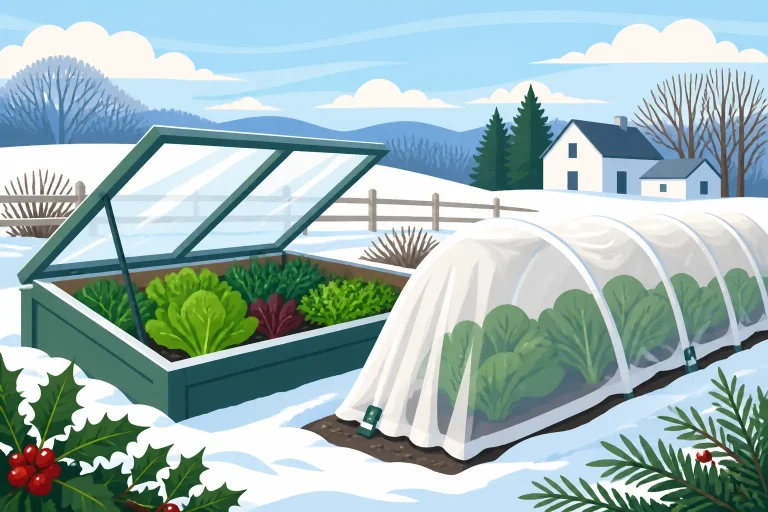
Row covers, low tunnels, and cloches can reduce heat loss around plants, but they are not interchangeable in every setting. A lightweight cover is easy to place over a short bed; a more structured tunnel may be more practical for a longer row or repeated use. Individual cloches suit a few plants but can take time to place across a large plot. Compare options in Pennsylvania Cold Season Protection: Row Covers, Tunnels, and Cloches.
Whatever the material, make sure the cover can reach close to the ground and be secured so it does not blow away. A cover that is loose, torn, or lifted by wind may provide less protection than expected. Keep the material from pressing heavily on delicate foliage when possible. If the protection system includes supports, check that they are stable and do not damage the plants.
Covers moderate the conditions around plants; they do not make a garden immune to a severe or prolonged cold event. Their performance depends on the material, how it is installed, the forecast conditions, and the site. Use the product or manufacturer’s instructions where relevant, and do not assume that a single layer is enough for every crop or night.
Place covers before the garden has cooled substantially, following the guidance for the material and situation. Secure the edges, then check them after wind or rain. Covers may need to be removed or opened when daytime conditions become warm. A cover left in place can trap excessive heat or moisture, especially when sunlight returns. The right routine depends on the weather, the crop, and the design of the covering.
Don’t overlook soil and site preparation
Moist, well-drained soil can store heat differently from very dry soil, but wet ground is not a reliable substitute for protection. Avoid leaving plants in waterlogged beds, and do not make last-minute changes to watering based on a frost forecast without crop-specific guidance. Manage soil moisture as part of good plant care, not as a guaranteed frost-control method.
Weed growth, dense vegetation, and tall structures can change airflow around beds. Removing clutter that blocks cold-air movement may help in some locations, but site changes should be made carefully. A hedge or barrier that protects against wind under one weather pattern may increase cold-air pooling under another. Observe the effect before making major alterations.
Pots and containers need particular attention. Their exposed sides and smaller volume of soil can cool differently from the ground, and a container on an open patio may experience more wind than a bed. When it is practical, move vulnerable pots to a sheltered location or group them where they can be covered. Check that the new spot is not a cold pocket or an area where rainwater collects.
Prioritize rather than covering everything automatically
If protection supplies are limited, start with plants that are most likely to be injured and hardest to replace: tender transplants, seedlings, blossoms, and crops in known frost pockets. Mature, cold-tolerant plants may need less attention, depending on the forecast and their condition.
Do not rely on overhead sprinkling as a general-purpose frost method. Water-based frost protection is a specialized practice with specific operating conditions, and an incorrectly timed or interrupted system can cause harm. Unless you have reliable crop-specific instructions and a system designed for the purpose, choose a suitable physical cover or postpone planting instead. The article Using Overhead Sprinklers for Spring Freeze Protection describes why this approach requires careful attention.
Respond to frost damage and improve next season’s plan
After a cold night, inspect plants once conditions allow, but avoid rushing to remove every damaged leaf. Some tissue may look wilted or darkened while other parts remain viable. Give the plant time to show which growth is still healthy. Immediate heavy pruning can remove living tissue along with damaged material, and a plant that appears injured may recover if its roots and growing points remain intact.
Check what was affected
Look for water-soaked, limp, blackened, or papery tissue, especially on exposed leaves, blossoms, and tender tips. Compare covered and uncovered plants, and compare the same crop in different parts of the yard. This helps distinguish frost injury from other problems such as wind damage, dehydration, or transplant stress.
Do not judge the entire plant by one damaged leaf. If the growing point is alive and the plant is otherwise established, new growth may appear. If flowers or young fruit were injured, the plant may survive but produce less from that flush. For vegetables, observe growth over the following days and follow crop-specific care guidance before fertilizing, pruning, or replanting.
If a frost occurs after transplanting, keep basic care steady. Avoid letting the root zone become excessively dry, but do not overwater in an attempt to “fix” cold damage. Protect the plants from another cold night if the forecast warrants it. If a large portion of a planting is lost, decide whether there is still enough growing time for a replacement crop, using local crop calendars and the seed or transplant maturity information.
Record the event
Write down the forecast, the lowest reading at your garden, the location of frost, and any injury. Note whether a cover was used and how it was installed. This record can help answer practical questions next time: Did the low area freeze while the upper bed stayed clear? Did the forecast station miss a colder pocket? Did the cover remain secure? Was a tender crop planted before the site’s usual cold risk had passed?
If damage recurs in one bed, consider changing the crop placement rather than repeatedly fighting the same conditions. Use the colder area for crops that tolerate cool weather, and reserve more sheltered or warmer beds for plants with less tolerance. A layout that matches plants to local conditions can reduce the need for emergency protection.
You can also compare your own observations with nearby frost data. The goal is not to find one perfect date, but to understand how your garden behaves relative to a useful local reference. When a station and your site repeatedly differ, plan around the pattern rather than assuming the station is wrong or that the difference will disappear.
Frequently Asked Questions
Does a high-elevation garden always get frost before a lower garden?
No. Elevation affects temperature, but terrain and airflow matter too. Cold air can settle in low pockets, while an exposed ridge may be colder because of wind. The result varies with weather conditions and the shape of the site.
Can frost form when the forecast low is above freezing?
It can. A forecast air temperature does not describe every plant surface or every part of a yard. Clear, calm conditions can allow the ground and leaves to cool differently from the air measurement at a forecast station.
Should I plant tender vegetables as soon as a regional frost date passes?
Not automatically. A frost date is a probability-based benchmark, not a guarantee. Check crop-specific guidance, your garden’s local conditions, and the short-range forecast. Be more cautious in a known frost pocket or on an exposed site.
Are row covers enough for any frost?
No. Protection depends on the material, installation, crop, and weather. Covers can reduce risk, but they do not guarantee that plants will be safe during every cold event. Follow material instructions and use local conditions to decide whether to cover or delay planting.
Disclaimer
This article is for general informational purposes only and does not constitute professional advice. Laws, prices and regulations vary by location and change over time. Consult a qualified professional for guidance on your specific situation. Pennsylvania Gardening Guide is not a government agency and is not affiliated with any university extension, state department of agriculture or other government agency.