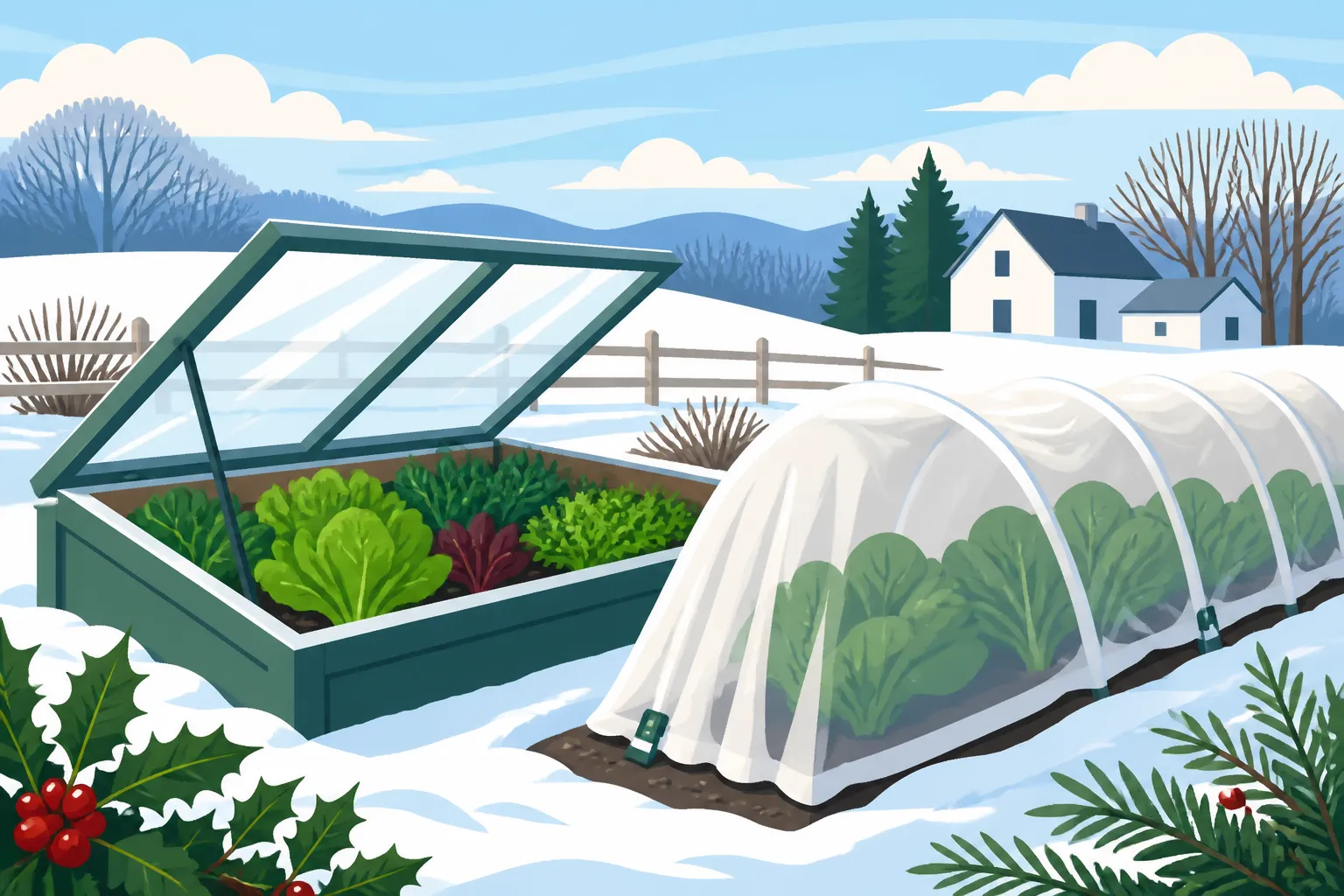
Winter Gardening in Zone 6: Cold Frames and Row Covers That Work
Pennsylvania winters can bring mild spells, sharp freezes, wind, snow, and long stretches of low light. A cold frame or row cover can help you harvest hardy crops longer, but neither makes winter behave like summer. The key is matching the structure to your garden, choosing crops that can handle cold, and managing ventilation and moisture as conditions change.
What cold frames and row covers can do
Cold frames and row covers protect plants in different ways. A cold frame is a low, enclosed structure with a transparent or translucent top. It traps warmth from the sun and shields plants from wind and precipitation. A row cover is a lightweight fabric laid over plants or supported on hoops; it reduces exposure to wind and cold while allowing air and some light and water through, depending on the material.
Both can extend the harvest season, protect established crops during cold spells, and give plants a more sheltered place to grow. Neither provides dependable heat during prolonged freezing weather. Their protection depends on the material, how well the structure is sealed or anchored, the weather, and the temperatures in your specific garden.
In Pennsylvania, that last factor matters. A sheltered urban yard, an exposed ridge, a low hollow, and a south-facing slope can experience quite different conditions. A USDA hardiness zone describes average annual extreme minimum winter temperatures, not the timing of spring planting or the conditions in a particular garden bed. If your area falls in Zone 6, that designation is useful context, but it is not a promise that crops under cover will survive every freeze. For a deeper explanation, see Why Hardiness Zones Measure Winter Lows, Not Spring Planting Dates and How Yard Microclimates Can Shift Your Planting Conditions.
Winter structures are best viewed as protection and harvest tools, not as a way to force fast growth in the darkest months. When daylight is short, plant growth slows even if the temperature under cover is relatively mild. The practical goal is usually to keep hardy crops alive and harvestable, and to take advantage of any mild stretches when growth resumes.
A useful winter setup should make these jobs easier:
- Shield plants from wind and rapid temperature swings.
- Keep leaves from being battered by rain, sleet, or snow.
- Hold some daytime warmth into the evening.
- Give you access to harvest without dismantling the whole structure.
- Allow excess heat and moisture to escape when the weather turns mild.
The trade-off is that every cover reduces some light, and enclosed spaces can overheat or stay damp. A structure that protects plants during a freeze can cause trouble on a bright, mild afternoon if it is left closed. Plan for access and ventilation before you install anything.
Choosing between cold frames and row covers
The right choice depends on what you want to protect, how much space you have, and how often you can check on the garden. A row cover is flexible and usually quick to install over a bed. A cold frame offers a sturdy, accessible enclosure for a smaller area, but requires a more permanent footprint and regular attention to its lid.
| Feature | Cold frame | Row cover |
|---|---|---|
| Best fit | A compact bed, greens, or seedlings that need a sheltered enclosure | A longer bed or several rows needing flexible protection |
| Structure | Rigid sides with a transparent or translucent lid | Fabric laid over plants or draped over hoops |
| Access | Lift or prop open the lid | Lift, fold back, or remove the fabric |
| Main management task | Vent on sunny or mild days; close before colder weather | Keep fabric anchored and prevent it from rubbing or crushing plants |
| Common drawback | Can overheat when closed; takes up space | Can tear, sag, or shift in wind and snow |
| Winter limitation | Does not generate heat during extended cold | Protection depends on fabric type, fit, and conditions |
When a cold frame makes sense
A cold frame is useful when you want to protect a small, frequently harvested patch. It can also shelter young plants during shoulder-season transitions, when nights are chilly but daytime temperatures may rise. Its rigid walls and lid offer a more enclosed space than a fabric cover, and the lid can be propped open for ventilation.
The location matters. A spot with good winter sun is generally more useful than a deeply shaded corner, because the frame depends on sunlight for daytime warming. Avoid a location where water regularly collects or where roof runoff pours onto the lid. If the frame is placed in an exposed spot, its sides and lid need secure anchoring so wind cannot shift them.
A cold frame can be built from different durable materials, but its lid should admit useful light and be easy to open safely. The lid also needs a way to stay open while you work. Do not rely on balancing it loosely; a sudden gust can slam it shut. Inspect hinges, supports, seals, and glazing before winter, and repair damage that could let the lid lift or leak.
When row covers make sense
Row covers suit longer plantings, irregular bed shapes, and gardeners who want a removable system. They can rest on hoops or directly over crops, depending on the material and plant height. Hoops keep fabric off leaves, which reduces rubbing and gives plants room to grow. Directly draped fabric can work for low crops, but it needs enough slack to avoid pressing on foliage as plants grow or as snow settles.
“Row cover” describes a range of fabrics, not one uniform level of protection. Some are lighter and admit more light; others are heavier and provide more insulation but can reduce light more. Check the product’s stated use and protection guidance rather than assuming that any fabric will handle a particular freeze. Follow the manufacturer’s instructions for installation, anchoring, and storage.
Row covers need special care in windy locations. Secure the edges so air cannot readily get underneath and lift the fabric. At the same time, make sure the cover does not form a tight, sagging pocket where water or snow can collect. Hoops should be strong enough for the conditions they are likely to face, and covers should be checked after storms.
Combining the two
A row cover inside a cold frame can provide an additional layer around plants, but extra layers are not automatically better. They can reduce light and airflow, and the enclosed space may become too warm or humid during a sunny spell. Use combined protection only when the setup is easy to inspect and ventilate.
If you are choosing just one structure, start with the area you can realistically manage. A small, well-maintained cold frame is often more useful than a large one that is hard to vent. A securely anchored row cover over a manageable bed is better than an improvised cover that shifts in wind or rests heavily on the plants.
Crops and timing for a Pennsylvania winter garden
Cold frames and row covers work best with crops that already tolerate cool conditions. They can help hardy plants persist through winter, but they cannot reliably turn a tender, actively growing summer crop into a winter crop. For a broader overview of plantings across the state, see Cool-Season Crops for Pennsylvania Spring and Fall Gardens and Pennsylvania Vegetable Sowing and Transplanting Calendar.
Common choices for protected cool-season beds include leafy greens such as spinach, kale, and lettuce, along with other crops selected for their ability to tolerate cool weather. Suitability depends on the variety, the plant’s maturity, and the conditions where it is growing. A young seedling and an established plant do not always respond to cold in the same way.
Winter success often begins before winter. Seeds need enough time and suitable conditions to germinate and establish, and transplants need time to settle in before growth slows. If planting is delayed until the coldest part of the season, a cover may keep plants from getting worse without giving them enough light and warmth to produce much new growth. Plan the planting window around your region, the crop, and the expected time needed to establish it. The general timing principles in Pennsylvania Fall Vegetable Planting Timelines can help with planning, while How Days to Germination Influence Spring Vegetable Planting Dates explains why germination time matters when choosing when to sow.
A sensible winter planting plan has three parts:
- Choose crops suited to cool conditions. Check seed packets or plant information for cold tolerance and expected maturity, and avoid treating a cover as a substitute for crop suitability.
- Establish plants before winter growth slows. Start with the recommended regional planting window for the crop, then adjust for your site’s exposure, elevation, and local weather patterns.
- Use covers to extend the usable season. Protect established plants from wind and cold, but expect growth to slow when days are short.
It can help to separate “overwintering” from “winter planting.” Overwintering means keeping established plants alive and harvestable through colder weather. Winter planting means sowing or transplanting into conditions when germination and growth may be very limited. A cold frame can make the first approach practical for some hardy crops. It does not guarantee that seeds sown in midwinter will germinate or develop quickly.
Your crop choice should also fit the structure. A low cold frame is easiest to use for short plants that you can harvest through the lid. Taller crops may outgrow the available height or press against the cover. A row cover over hoops allows more vertical room, but harvesting may require lifting or removing part of the fabric. If you expect frequent picking, favor a design that makes access straightforward.
Do not assume that a crop is safe simply because it is described as cold-tolerant. Wind, wet soil, repeated freeze-thaw cycles, and the length of a cold spell can affect plants. A cover can lessen exposure, but it does not remove these risks. Monitor the plants and keep a backup plan for harvesting before a severe weather event when practical.
Setting up a cold frame or row cover
A reliable setup starts with the bed and the site, not the cover itself. Choose an area with suitable light, workable access, and drainage. If the soil stays waterlogged, a cover may preserve damp conditions and leave roots more vulnerable. Before covering a bed, remove damaged plant material and check that plants are not already crowded or showing signs of disease.
Prepare the bed
Clear debris that could press against the fabric or block the cold frame lid. Water the soil if it is dry, but avoid saturating it before sealing the bed beneath a cover. Plants need moisture in winter, though they generally use less water when growth is slow and temperatures are low. If you are unsure whether the root zone is dry, use the checks in How to Check If Garden Soil Is Dry at Root Depth rather than watering by habit.
Harvest mature leaves before installing a cover if they are likely to be damaged or trapped against the structure. Keep enough healthy foliage for the plant to continue functioning. Remove weeds while they are easy to reach; they compete for light and make it harder to inspect crops later.
A cover can make a bed feel finished, but access still matters. Decide how you will reach the center for harvest and inspection. With a cold frame, ensure the lid opens far enough for your hands and tools. With a row cover, decide whether you will lift one edge, use clips, or roll back a section. A setup that is awkward to open is more likely to be left closed when it needs ventilation.
Install row covers carefully
For a hoop-supported cover, place hoops so the fabric has enough room to rest above the crop. Avoid sharp edges that could puncture the material. Drape the cover evenly and secure the edges so wind cannot catch underneath. Leave enough fabric to accommodate plant growth and some settling, but not so much that it pools on the bed.
If the fabric rests directly on foliage, check that the plants are not being bent or crushed. Wet fabric can become heavier, and wind can cause it to rub against leaves. Lift the cover periodically to inspect the crop and reposition it if needed. Replace torn material or secure small damage promptly, since a loose flap can enlarge quickly in wind.
The edge treatment should match the site. Burying fabric edges can improve stability but makes repeated access less convenient. Weights or clips can be easier to manage, but they must hold securely without damaging the cover. Follow the product’s installation directions and check the fastening after windy weather.
Set up and secure a cold frame
Place the frame on firm, level ground so its lid closes properly. Keep the lid accessible and make sure the frame does not sit in a runoff channel. A tilted lid can help shed precipitation, but its construction should remain secure. Check that the sides do not wobble and that the lid cannot be lifted easily by wind.
A simple lid prop helps with ventilation, but it should hold the lid firmly in the position you choose. For safety, do not leave a lid balanced on an object that can slip. If the frame includes a built-in vent or adjustable opening, learn how it works before a sunny day requires a quick adjustment.
Check the inside after rain or snow. Water that seeps in can leave foliage wet and soil overly saturated. Clear debris from the lid so light can enter. If snow accumulates, remove it when safe to do so and according to the structure’s design; a cover or lid should not be assumed to support a heavy load.
Prepare for winter weather
Before the first sustained cold period, inspect anchors, hinges, hoops, fabric, and glazing. Make sure you can open or lift the cover even when the ground is wet or frozen. Keep the area around it clear enough to reach the bed.
Cold frames and row covers can be vulnerable to strong wind and heavy precipitation. If a storm is expected, check the manufacturer’s guidance and the structure’s condition. Do not climb on a frame or use a cover in a way it was not designed to support. When in doubt, prioritize safe access and avoid trying to clear a structure from an unsafe position.
Managing covers through changing winter weather
The most important winter habit is checking the garden regularly. Conditions inside a covered bed can change faster than the forecast suggests, especially on a bright day. A cold frame that remains closed can become much warmer than the outdoor air, while a poorly anchored row cover can shift or lift in wind. Checking the structure and the plants helps prevent small problems from turning into crop damage.
Ventilation and temperature swings
Open a cold frame or loosen a cover when conditions inside become too warm or humid, and close it again before colder weather returns. Because each frame, fabric, and location behaves differently, use the plants and the inside conditions as cues rather than relying on a single universal opening schedule. A simple thermometer placed inside the structure can help you understand how it responds to sun and weather, but it does not replace checking the plants.
Ventilation helps limit excess humidity and condensation. Persistent moisture on leaves can contribute to disease problems, particularly when air movement is limited. If you find heavy condensation, review how the frame is vented and whether the bed is too wet. Avoid making abrupt changes that expose plants to a sudden harsh shift; make adjustments that suit the weather and the structure.
During mild stretches, ventilation can prevent overheating and encourage healthier conditions. Before a forecast cold spell, close the frame and check that row covers are in place and secure. If a cover has been moved for harvest or weeding, put it back promptly when conditions call for protection.
Water, snow, and light
Covered beds may receive less rainfall than open beds, especially beneath a cold frame. Check the soil before watering. Water only when the root zone needs it, and avoid leaving plants wet going into a cold period. The low light and slow growth of winter usually mean that water use is different from summer; a routine based on summer watering can keep the bed too wet.
Light matters as much as temperature. Clean a cold frame lid when dirt, leaves, or snow reduce the light getting through. Row-cover materials also affect how much light reaches plants, so use a product suited to the intended season and avoid unnecessary layers. Even with good light, growth can remain slow during short days.
Snow can insulate a bed in some circumstances, but it can also weigh down a frame or push fabric onto plants. Do not assume that snow will always help or that a cover is strong enough to hold it. Inspect the structure after storms and follow the product’s guidance for snow and wind. If fabric is sagging, take care of the problem before it presses heavily on the plants.
Harvesting and inspecting
Harvest on a dry part of the day when practical, and handle leaves gently. Lift a row cover only as much as needed, then secure it again. With a cold frame, use the access opening rather than removing the lid for a long period in cold, windy weather. Take time to inspect for damaged leaves, pest activity, excessive moisture, and loose fasteners.
Harvesting can help keep the crop usable, but avoid stripping plants of all their healthy leaves. Remove damaged material and dispose of it appropriately; do not leave diseased leaves packed against plants under a cover. If a crop begins to decline, determine whether the cause is cold injury, excess moisture, lack of light, or another issue before adding more layers.
Keep notes about what worked. Record the location, crop, cover type, ventilation choices, and any problems after storms or cold spells. These observations are more useful than assuming that every winter or every bed will behave the same way. A successful setup is one you can monitor, adjust, and reach when the weather changes.
Frequently Asked Questions
Can a cold frame keep vegetables growing all winter in Pennsylvania?
It can help hardy, established crops survive and remain harvestable, but it cannot guarantee continuous growth. Short days, prolonged cold, and local exposure can slow growth or damage plants. Treat the frame as a season extender, not a heated greenhouse.
Are row covers enough protection for a Zone 6 garden?
That depends on the fabric, how it is installed, the crop, and the weather. Check the manufacturer’s protection guidance and secure the cover against wind. A row cover reduces exposure but does not guarantee survival during every freeze.
Should a cold frame stay closed all winter?
No. A closed frame can overheat on sunny days, even when outdoor conditions are cold. Check the plants and conditions inside, ventilate when needed, and close it again when colder weather returns.
Can I start seeds under a cover in the middle of winter?
A cover may shelter seeds, but it cannot make up for low light or unsuitable germination conditions. Winter sowing results depend on the crop and local conditions. For more reliable planning, choose a crop-appropriate planting window and give seeds or transplants enough time to establish before winter growth slows.
Disclaimer
This article is for general informational purposes only and does not constitute professional advice. Laws, prices and regulations vary by location and change over time. Consult a qualified professional for guidance on your specific situation. Pennsylvania Gardening Guide is not a government agency and is not affiliated with any university extension, state department of agriculture or other government agency.